When families begin exploring bathroom modifications for senior safety, the first question is often not about products or features. It is usually about a specific daily challenge.
In many homes, the concern starts when stepping over a tub wall becomes difficult, balance feels less predictable, or a previously comfortable bathroom no longer feels as safe as it once did.
Two solutions frequently considered are walk-in tubs and barrier-free showers. Both are designed to improve accessibility and reduce fall risks, but they serve different needs. Understanding how each option fits into daily routines can make the decision process much clearer.
Why the Bathing Area Often Becomes the Main Safety Concern
During bathroom accessibility projects, the bathing area is often where the first safety concerns become apparent. Homeowners may feel comfortable moving through the room, but they become more cautious in a tub or on wet surfaces.
In older homes across the North Country, another factor often matters. Many bathrooms were not designed for accessibility. Higher tub walls, narrow floor plans, and limited turning space can make everyday use more difficult over time.
Common warning signs include:
- Difficulty stepping into or out of a bathtub
- Increased reliance on walls or countertops for balance
- Concerns about slipping on wet flooring
- Avoiding baths or showers because of mobility challenges
- Needing assistance for previously manageable tasks
These situations often lead homeowners to consider modifications that improve bathroom safety for seniors before a more serious incident occurs.
What Makes Walk-In Tubs Different From Traditional Bathtubs
A walk-in tub changes the way a person enters and exits the bathing area. Instead of stepping over a high tub wall, users enter through a low-threshold door and sit before filling the tub.
One question that frequently comes up is whether a walk-in tub removes every mobility challenge. While the low-entry door reduces the need to step over a high tub wall, users still need to be comfortable sitting down and standing up from the built-in seat.
Features commonly associated with walk-in tubs include:
- Low-entry door systems
- Built-in seating
- Grab bars integrated into the design
- Handheld shower attachments
- Slip-resistant flooring surfaces
One consideration that often surprises homeowners is the bathing process itself.
The user typically remains seated while the tub fills and drains, which can affect the overall routine compared to a traditional shower.
Why Barrier-Free Showers Continue to Gain Attention
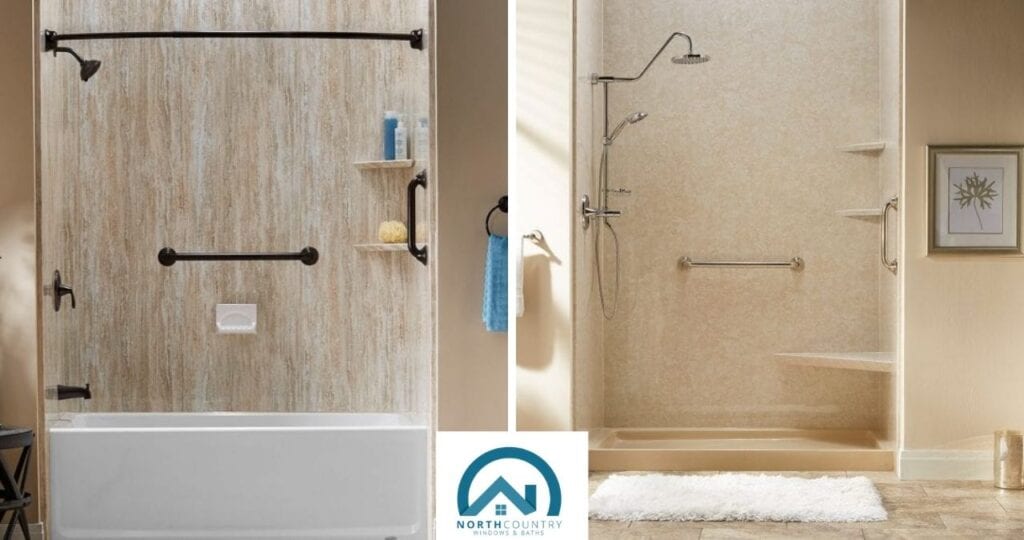
Barrier-free showers take a different approach to accessibility. Rather than creating a contained bathing space, they remove thresholds and provide a more open entry.
In many remodeling projects, barrier-free showers are chosen not because mobility is currently limited but because homeowners want a solution that can adapt over time. The familiar showering routine remains largely unchanged while accessibility improves.
Benefits frequently associated with barrier-free showers include:
- No step or threshold at the entrance
- Easier access for mobility aids
- More open floor space
- Greater flexibility for caregiver assistance
- Simpler entry and exit during daily use
A common misconception is that barrier-free showers are only intended for wheelchair users. In reality, they are often selected by homeowners who want to plan for future accessibility needs.
Comparing Walk-In Tubs and Barrier-Free Showers
The choice between these two options usually depends on how the bathroom is used rather than which product offers more features.
| Consideration | Walk-In Tub | Barrier-Free Shower |
|---|---|---|
| Entry Method | Low-threshold door | No-threshold entry |
| Bathing Style | Seated soaking | Standing or seated showering |
| Daily Use Time | Longer due to filling and draining | Generally faster |
| Caregiver Access | More limited | Typically more open |
| Space Flexibility | May require additional room | Often adapts well to various layouts |
One pattern that frequently emerges during planning is that the decision often comes down to bathing habits rather than product features.
Households that enjoy soaking tend to lean toward walk-in tubs, while those focused on quick, everyday accessibility often prefer barrier-free showers.
Factors That Influence the Final Decision
The most suitable solution often depends on conditions that extend beyond personal preference.
Important considerations include:
- Current mobility level
- Anticipated future accessibility needs
- Bathroom size and layout
- Existing plumbing configuration
- Whether caregivers assist with bathing
- Personal bathing habits and preferences
A common surprise during the planning process is that bathroom dimensions often influence the decision before feature comparisons begin. Available floor space, plumbing locations, and doorway clearances can all affect which options are practical.
Looking Beyond the Fixture Itself
One lesson frequently seen in accessibility planning is that successful bathroom modifications for senior safety involve more than selecting a tub or shower.
Additional upgrades may include:
- Grab bars near entry points
- Slip-resistant flooring
- Improved lighting
- Wider doorways
- Accessible storage placement
- Adjustable shower fixtures
In many cases, these upgrades address everyday safety concerns that a new tub or shower alone cannot solve. Improving visibility, stability, and ease of movement throughout the room can have a significant impact on long-term usability.
Frequently Asked Questions
Is a walk-in tub safer than a barrier-free shower?
Both options can improve safety, but they address different needs. The better choice depends on mobility level, bathing preferences, and the bathroom layout.
Can a barrier-free shower be installed in a small bathroom?
In many cases, yes. The available space, plumbing configuration, and overall layout will help determine whether the installation is practical.
Do walk-in tubs require more maintenance than standard tubs?
Walk-in tubs may require additional attention to door seals and moving components. Regular cleaning and maintenance can help keep them functioning properly.
What features can improve bathroom safety besides a new tub or shower?
Grab bars, slip-resistant flooring, and improved lighting are common safety upgrades. These features can help reduce risks throughout the bathroom.
When should homeowners consider senior bathroom safety modifications?
Many people begin planning modifications when everyday tasks become more difficult or uncomfortable. Addressing concerns early can provide more flexibility when choosing accessibility solutions.
North Country Windows & Baths in Omaha, Lincoln, NE, and the Surrounding Areas
At North Country Windows & Baths, our Windows are backed by a Lifetime Warranty, giving our customers peace of mind. Each window is custom-made to fit your home with state-of-the-art engineering by design, and energy efficiency enhanced by style. Our windows are made to last for years of maintenance-free beauty.
Whether you want a tub shower combo surrounded by subway tile or a low threshold shower with granite-like walls, you can customize your BathWraps space and even add accessories like soap dishes, caddies, seating, grab bars, and more. Contact us today.