The bathroom is one of the first rooms buyers evaluate, and the choice between a bathtub and a shower is one of the most consequential decisions you can make in a bathroom renovation. It affects resale value, buyer pool, daily utility, and space. The answer is rarely one or the other. It almost always depends on how many bathrooms your home has, who lives there, and who you expect to sell to.
What has changed in recent years is the weight of the shower side of the argument. Modern walk-in showers with glass enclosures, spa-like fixtures, and accessibility features have moved from a premium option to an expected feature in primary bathrooms. But the bathtub has not lost its value. It has become more strategic.
Bath vs Shower: Which Adds to Home Value?
Shower Benefits
Less space
A regular walk-in shower measures 9 sq. ft. Meanwhile, a standard bathtub will take up 13 sq. ft. In a small bathroom, installing a shower makes more sense especially if there is a desire for a double vanity. It also leaves the option for a slightly bigger shower.
Water-wise
A regular size, no-frills tub will take 25 to 40 gallons of water to fill. Spa-type baths will take between 80 to 100 gallons of water to fill the tub. Conversely, an eight-minute shower, which is a long shower, will consume around 17 gallons of water. Assuming that an average shower is around five minutes, that would take about 10 gallons of water. As you can see, installing a show instead of a bathtub can help lower water usage in your home.
Ease of access
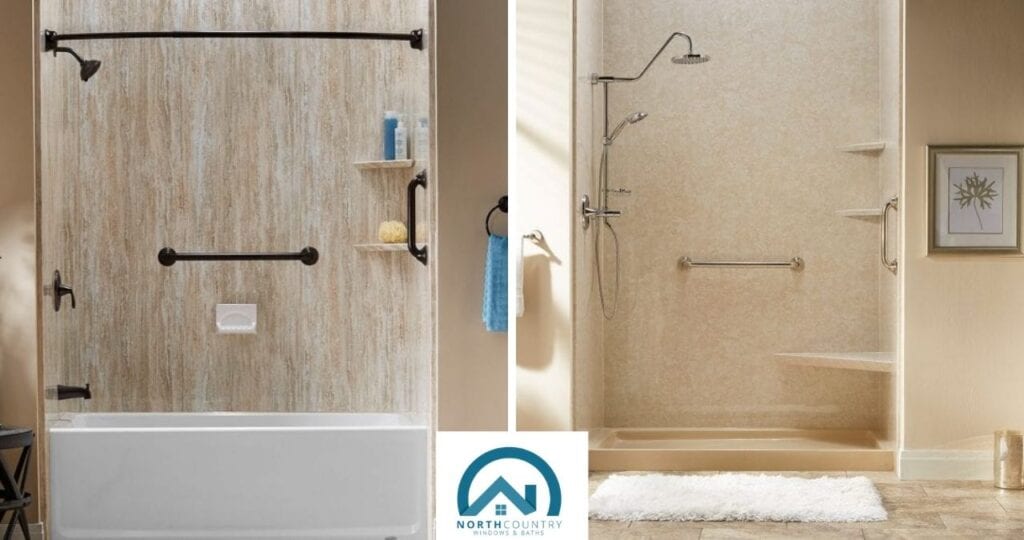
It’s easier to walk into a shower than climb in and out of a bath – especially if the water is a tad too hot. Nowadays showers have non-slip flooring and a grab bar too. This can be tremendously beneficial for older adults and children using the shower. Furthermore, bigger showers have a seat which is good for all ages to sit and scrub their feet or relax after a long day.
Customizable Experience
Modern showerheads offer a wide range of spray settings, pressures, and configurations. Multi-function rain heads, handheld wands, and body spray systems give users a level of personalization that most standard bathtubs cannot match outside of high-end jetted models.
Easy cleaning
Cleaning showers doesn’t require as much time on the knees to clean as baths do. In fact, showers are easy to clean while you’re in the shower, especially with the help of a handheld showerhead.
Bathtub Benefits
Cheaper installation
Installing a shower can cost anywhere from $600 to $12,000. Plumbing costs aside, there is the cost of matching tiles and customization if opting for a custom-size walk-in shower. On the other hand, installing a bathtub will cost anywhere from $500 for a basic, standard tub, to $8,000 for a large, spa-style tub with jets. Not to mention, labor costs are much lower for installing a bath.
Resale value and buyer appeal
A bathtub remains a meaningful resale asset in the right context. A few rules worth knowing before you decide:
- Homes with at least one tub sell faster than comparable homes with none, particularly in family-oriented neighborhoods where buyers with young children frequently list a tub as a non-negotiable requirement
- Never remove the only bathtub in a home if you plan to sell in the near term — doing so risks shrinking your buyer pool in ways that outweigh any aesthetic improvement
- If your home has two or more bathrooms, converting one to a walk-in shower while retaining a tub in another is generally considered a positive upgrade by most real estate professionals
- The ROI is closer than most expect — industry data shows high-quality shower renovations and quality tub installations both return in the 60 to 70 percent range, so the decision should be driven by your home configuration and likely buyer profile more than pure ROI math
The one-tub rule is the clearest line in the data. Everything else is context.
Kiddie fun and safety
Tubs are easy to babyproof. There are gadgets and anti-slip rubber mats to keep the baby safe. There are also covers for protruding faucets. For the tots, bath time can be fun and is cost-effective. Put two or three tots in one bath together and add bath toys and liquid soap. Bathing is also more hygienic for the little ones as the water can get into all the areas it needs to, unlike a shower. As the kids get older, they can each take a turn and bathe in the same water.
Doggies
Bathtubs are very handy to wash the family dog in. Once you get your dog in the tub, they are somewhat trapped and can soak in water to loosen dirt and whatever else they might have been rolling in.
Health benefits
Research shows that a nice hot bath has similar benefits to exercising. Apart from helping us to relax, bathing can improve moods and help fight the common cold and seasonal flu. Furthermore, bathing boosts immunity to viruses.
Relaxation and Wellness
For many homeowners, the ability to take a proper soak is a quality-of-life consideration that no shower, however well-equipped, fully replaces.
What the Data Says About Home Value
The ROI comparison between showers and bathtubs is closer than most homeowners expect. Industry analysis shows return on investment figures that are nearly identical for high-end shower renovations versus quality tub installations, both typically returning in the 60 to 70 percent range. Where showers pull ahead is in buyer perception in urban markets, where space efficiency and modern design carry more weight. Where tubs retain their edge is in suburban and family-oriented markets where at least one soaking tub is an expectation, not a preference.
A few data points worth knowing as you plan:
- Homes with at least one bathtub tend to sell faster than comparable homes with none, particularly in family markets
- Luxury walk-in showers with spa-like features can add meaningful premium appeal in higher-end primary bathrooms
- Removing the only tub in a home can reduce its appeal to a significant portion of family buyers, a risk that is rarely worth the trade-off
- Both showers and tubs return similar renovation percentages, so the decision should be driven by your buyer profile and home configuration more than pure ROI math
When to Keep or Add a Bathtub
- Your home has only one bathroom
- You are in a family-oriented neighborhood or expect to market to buyers with children
- You have the space to include both a tub and a separate shower
- You are renovating a guest bathroom or secondary bathroom where versatility matters
When a Walk-In Shower Makes More Sense
- Another bathroom in the home already has a tub
- The bathroom is small and space efficiency is the priority
- The primary bathroom is in a higher-end home where a spa-style shower is the expected upgrade
- You are targeting buyers with accessibility needs or modern design preferences
- You are not planning to sell in the immediate future
Frequently Asked Questions
Does removing a bathtub hurt resale value?
It depends entirely on whether it is the only tub in the home. If your home has two bathrooms and one retains a tub, converting the other to a walk-in shower is generally well-received by buyers and can improve the primary bathroom’s appeal. If the tub you are removing is the only one in the house, most real estate professionals recommend against it, as it narrows your buyer pool, particularly among families with young children.
Do walk-in showers increase home value?
A well-designed walk-in shower, particularly in a primary bathroom, is one of the upgrades buyers respond to most positively. High-end finishes, glass enclosures, and spa-like fixtures can add meaningful premium appeal. However, the return on investment is comparable to a quality tub renovation, so the decision should be based on your specific buyer market and home configuration rather than the assumption that a shower automatically adds more value.
What is the minimum shower size for a bathroom renovation?
Building codes typically require a minimum shower stall of 30 by 30 inches, though the National Kitchen and Bath Association recommends at least 36 by 36 inches for comfortable daily use. If space allows, a shower in the 36 by 48 inch range or larger is a meaningful upgrade that buyers notice.
Can I have both a tub and a walk-in shower in the same bathroom?
Yes, and in a primary bathroom with adequate square footage, having both is considered the strongest configuration for resale value. A freestanding soaking tub paired with a separate walk-in shower is one of the most desirable primary bathroom layouts in the current market. It gives buyers the relaxation option without sacrificing the daily utility of a well-designed shower.
North Country Windows & Baths | Bathroom Remodel Contractor Lincoln, NE
At North Country Windows and Baths, we help homeowners in Lincoln and throughout the region make smart bathroom decisions that work for their lifestyle and their resale value. Whether you want a low-threshold walk-in shower with custom wall panels and built-in seating, a soaking tub as a statement centerpiece, or a layout that gives you both, our BathWraps installations are designed and built to last. No subcontractors, no hidden costs, and everything backed by our warranty. We serve Lincoln, Omaha, Eastern Nebraska, Western Iowa, South Dakota, Kansas, Missouri, and surrounding areas. Contact us today to get started.