As temperatures begin to fall across Nebraska, window problems that went unnoticed during summer often become easier to identify. A room that felt comfortable in July may suddenly feel colder near the glass. Condensation becomes more noticeable, windows may become harder to operate, and drafts become easier to detect.
A recurring question during fall window consultations is whether these problems actually mean replacement is necessary. Not every draft or cold spot points to a failed window. The more useful question is whether the symptoms are isolated or indicate that the window is no longer performing properly.
5 Signs Your Windows Need To Be Replaced This Fall
Five signs can help determine whether windows deserve closer evaluation before November.
1. Cold Drafts
A noticeable draft is one of the clearest signs that a window deserves inspection. During warmer months, air leakage can be difficult to detect because the temperature difference between indoors and outdoors is smaller.
A common misconception is that every cold spot means the glass has failed. Air can enter through:
- Worn weatherstripping
- Deteriorated seals
- Gaps around the frame
- Poor installation
- Aging components
A useful fall check involves standing near a closed window on a cold day and comparing the temperature around the frame with nearby wall surfaces. A persistent stream of cold air is different from the normal cool sensation produced by glass.
The location also matters. Air coming through the sash or frame points toward the window assembly, while airflow around surrounding trim may indicate an installation or adjacent building issue.
If similar drafts occur at several windows, the problem deserves a broader evaluation.
2. Hard to Operate
A window that sticks, drops, requires excessive force, or refuses to stay open is showing a mechanical warning sign.
Older windows can develop operating problems as components wear, frames shift, or materials deteriorate. Common trouble spots include:
- Locks
- Sashes
- Balances or hinges
- Hardware
- Frames
Professionals frequently encounter homeowners who have simply adapted to difficult windows. Before November, frequently used windows should be checked to determine whether they can:
- Open without excessive force
- Close completely
- Stay in position
- Lock properly
- Operate without unusual movement
A window that cannot open properly may also affect ventilation or emergency egress, depending on its location.
3. Fogging Between Panes
- Moisture Location
- Possible Indication
- Interior surface
- Indoor humidity or temperature
- Exterior surface
- Outdoor conditions
- Between panes
- Possible failed glass seal
Condensation on the room side of a window does not automatically indicate a problem. Indoor humidity, ventilation, and outdoor temperatures all influence surface condensation.
Fogging or moisture between panes is different. Insulated glass units depend on sealed spaces between the panes. When that seal fails, moisture can enter and create persistent fogging.
Wiping the glass will not remove moisture trapped between panes.
A failed insulated glass unit does not automatically mean the entire window must be replaced. In some cases, the glass unit can be replaced separately. The condition of the frame and other components should also be considered.
4. Frame Damage
Water staining, soft wood, peeling finishes, or deterioration around a window frame should not be treated as purely cosmetic without investigating the source.
Moisture can enter through:
- Failed seals
- Deteriorated exterior materials
- Drainage problems
- Gaps around the opening
- Flashing or installation problems
The timing can provide a clue. Damage that repeatedly appears after rain raises a different concern from condensation that develops on a cold morning.
Check for:
- Dark or recurring stains
- Swollen materials
- Peeling paint
- Soft areas
- Moisture returning after rain or snow
The visible damage may not be where the problem starts. Water can enter around the window and travel into surrounding materials.
The frame, flashing, sealants, surrounding structure, and installation all affect how the opening handles water. Identifying the source should come before repairing visible damage or deciding on replacement.
5. Cold Rooms
Uneven comfort can also indicate a window performance problem. A room with several older windows may feel noticeably colder than adjacent areas even when the thermostat maintains the same setting.
This differs from simply feeling cool near glass. Large glass surfaces can naturally feel cooler than insulated walls. The stronger warning sign is a persistent room-to-room temperature difference, especially when colder areas are concentrated around older windows.
Look for:
- A particular room consistently feeling colder
- Several windows with similar condition
- Cold areas near multiple openings
- Greater differences as temperatures fall
- Continued discomfort despite normal thermostat settings
Windows are not always responsible. Insulation, ductwork, room orientation, and air circulation can also affect comfort.
When several windows in the same room also show air leakage or deterioration, their combined condition becomes more relevant.
When Is Replacement Appropriate?
One warning sign does not automatically mean replacement is necessary. The stronger indication comes from the number, severity, and recurrence of problems.
Consider:
- How many windows are affected? One failure may be isolated.
- What is failing? Glass, hardware, seals, and frames have different repair considerations.
- Is the frame sound? Deterioration can limit repair options.
- Is moisture entering? The source should be identified first.
- Do problems keep returning? Recurring repairs may indicate broader deterioration.
It is also important to confirm that the window is causing the problem. Replacing a window will not correct inadequate wall insulation or a separate drainage issue.
For Nebraska homes, fall provides a practical opportunity to evaluate these issues before winter makes them more disruptive.
Frequently Asked Questions
Can a window be replaced without replacing the surrounding wall?
In many replacement projects, the existing wall remains in place. The installation approach depends on the condition and configuration of the existing opening.
How long does a window inspection take?
The time depends on the number of windows and the problems being investigated. An assessment may include operation, seals, frames, moisture damage, and the surrounding opening.
Should measurements be taken before choosing replacement windows?
Yes. Replacement windows need to correspond to the actual opening dimensions and installation requirements. Accurate measurements help determine the appropriate configuration.
Does window style affect performance?
Style is only one factor. Proper sizing, installation, glass configuration, frame condition, and the characteristics of the opening also affect performance.
Is it necessary to replace windows that still work?
Not necessarily. Age alone does not establish that replacement is needed. Recurring performance problems, deterioration, moisture concerns, and overall condition are more useful factors.
North Country Windows & Baths in Omaha, Lincoln, NE, and the Surrounding Areas
At North Country Windows & Baths, our Windows are backed by a Lifetime Warranty, giving our customers peace of mind. Each window is custom-made to fit your home with state-of-the-art engineering by design, and energy efficiency enhanced by style. Our windows are made to last for years of maintenance-free beauty.
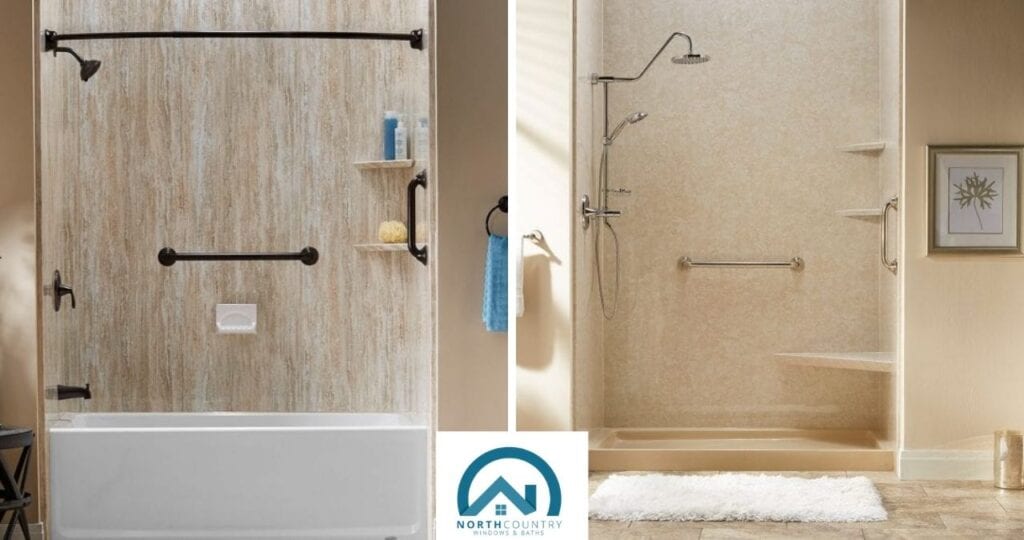
Whether you want a tub shower combo surrounded by subway tile or a low threshold shower with granite-like walls, you can customize your BathWraps space and even add accessories like soap dishes, caddies, seating, grab bars, and more. Contact us today.