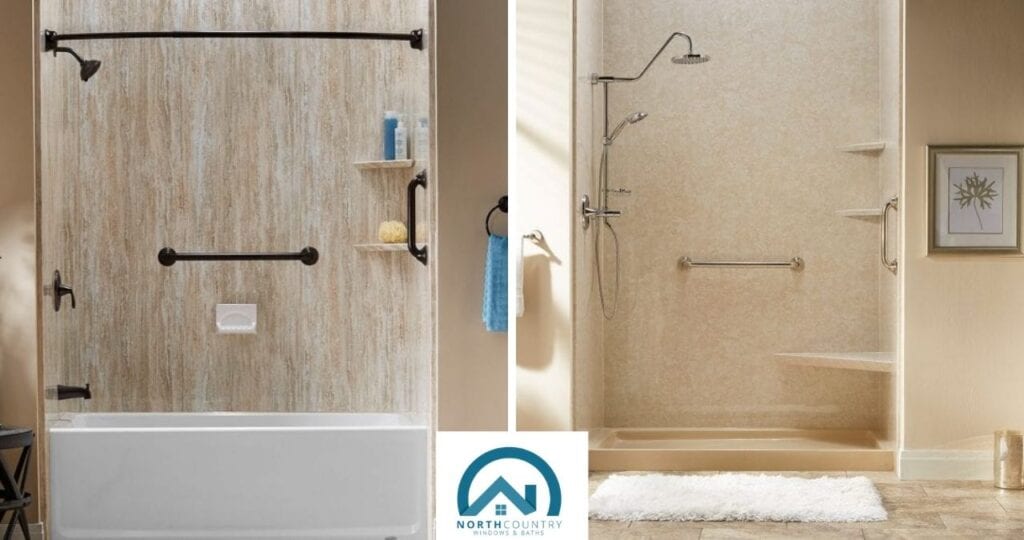
With the size of bathrooms expanding and looking more glamorous than ever, the traditional shower/tub bathroom setup is gradually becoming a thing of the past. One common theme in newly renovated homes is the low threshold shower. With the endless trends that come and go when it comes to bathroom renovation and remodeling, this one’s stuck. And it doesn’t seem to be going anywhere anytime soon. It’s a sleek look with many advantages.
What Is A Low Threshold Shower?
A low-threshold shower is a walk-in shower featuring a minimal curb or flush entry designed to eliminate the step-over barrier of traditional showers. Also called curbless or zero-threshold showers, these units provide a sleek, modern look while prioritizing safety and accessibility. Unlike traditional showers that require stepping over a high lip, low-threshold showers feature a sloped pan and specialized drainage that allows water to flow naturally without pooling on your bathroom floor.
Reducing slips and falls
Walk-in showers in general are all the rage nowadays. With our increasingly fast-paced culture, many homeowners no longer care much about leisurely soaking in a bathtub every night. Quickly hopping in and out of the shower is looking more and more attractive. This is where the low threshold comes in. It’s the epitome of convenience. With the threshold being so low or even almost non-existent, it’s a much safer way to enter and exit your shower.
The frequency and possibility of any slip or fall decrease dramatically. This can be especially helpful for the elderly, those living alone, or those with any kind of mobility issues or limitations. Falls are the leading cause of injury and death among older adults. According to the CDC, one in four Americans aged 65 and older falls every year , with many of these accidents occurring in bathrooms—where wet floors and high thresholds create a dangerous combination. Traditional showers require stepping over a raised lip, which is especially challenging for seniors with limited mobility or those using walkers, wheelchairs, or other assistive devices.
Low-threshold showers eliminate this hazard entirely. By removing or drastically reducing the step-over barrier, you create a safer entry and exit that significantly reduces tripping and falling risk. This design is especially critical for aging in place, allowing seniors and individuals with mobility challenges to maintain independence while bathing safely. For buyers looking to retire in their homes, a low-threshold shower is one of the most impactful safety upgrades available.
Material & Construction: Why Acrylic Matters
Most quality low-threshold showers use nonporous acrylic construction, which offers several distinct advantages over alternatives.
Acrylic Benefits
Acrylic shower pans are high-gloss, durable, and nonporous, meaning they don’t absorb water, mildew, or bacteria. This makes them inherently easier to clean than tile or fiberglass, requiring only occasional wipe-downs with mild soap. The smooth, seamless surface eliminates cracks or crevices where moisture can hide and cause mold growth over time.
Acrylic is also lightweight compared to ceramic tile, making installation simpler and more cost-effective. The material is reinforced with fiberglass backing for added durability and stability, so it holds up well to daily use year after year.
Specialized Slope & Pan Design
One crucial feature of low-threshold showers is the engineered slope of the shower pan. The floor is angled—typically toward the center drain or trench drain—at a specific grade to ensure water flows naturally by gravity. This slope is shallow enough that you won’t notice it underfoot, but critical enough to prevent water from pooling or escaping outside the shower area. Professional installation ensures this slope is precise, which is essential for long-term performance and preventing water damage to surrounding areas.
What happens to the water?
A natural question that comes up here maybe, where does the water go? In order to prevent the water from spilling over the barrier, the shower will need a proper drain. The two designs that keep your bathroom dry are the trench drain or the traditional drain. The trench drain is a long drain where the threshold would typically be. The traditional drain will require that your floors slope towards the center of the shower so that gravity does that work. It’s a much more seamless and sleek design.
Designing a bathroom for your low threshold shower
There are endless ways to customize your bathroom when you decide on a low threshold shower. First and foremost, you can actually make the decision to forego doors altogether. This will mean you’ll have the same tiles throughout the whole bathroom, creating a more spacious look. You can choose between granite, quartz, marble tiles and so much more. You can even add cabinet space and areas for storage without the space that the door usually takes up. Also, no need to clean the door if there isn’t one! And speaking of cleaning, low threshold showers tend to require a lot less. Without the curves and corners of your shower/tub setup, there’s essentially less surface area.
They typically only require the occasional wipe down using a mild cleanser. Some other features that are wonderful for the mobility-conscious include folding or fixed seats, soap dishes at proper heights, safety grab bars for a safe transition in and out, and even specific showerheads. Have you always wanted a waterfall shower head or steam option? Now’s the perfect time to create that real spa experience in the comfort of your own home. Customizing your bathroom this way will create a unique and contemporary look perfect for modern times. More space, more time, and less cleaning? Who wouldn’t want all that?
Accessibility for Walkers & Wheelchairs
For seniors and individuals with mobility challenges, a low-threshold shower isn’t just convenient, it’s often the difference between independence and dependence.
Wheelchair Access
Wheelchair users benefit dramatically from zero-threshold design. Without a step to navigate, chairs roll smoothly into the shower area. For proper wheelchair maneuverability, bathroom planning should consider ADA guidelines: a 60-inch turning radius allows a wheelchair to rotate fully within the space. Doorways should be at least 32 inches wide, ideally 36+ inches for comfortable access.
Walker Users
Individuals using walkers face unique challenges with traditional showers—the high threshold creates a tripping hazard and requires lifting the walker over the barrier. Low-threshold showers eliminate this entirely. Walkers can move smoothly from the bathroom floor into the shower with no jarring bumps or obstacles. Pair this with grab bars positioned at accessible heights (typically 33-36 inches from the floor) and non-slip flooring, and you’ve created a safe bathing environment.
Threshold Height Standards
The ADA recommends that thresholds not exceed ½ inch in height. Many low-threshold showers meet or exceed these accessibility standards, making them a practical choice for aging in place and universal design. When properly specified, they’re not just safer—they’re compliant with accessibility guidelines that improve the home’s long-term resale value and marketability to aging homeowners.
Is a low threshold shower right for you?
With all the advantages of a low threshold shower, is it the right choice for everyone? Maybe. Maybe not. You’ll want to consider your lifestyle and how important tubs are in your day-to-day. Do you have or are planning on having children anytime soon? You’ll definitely need a shower with a bathtub. Do you already have or want to install a separate jacuzzi at some point? Then a low threshold shower may work out perfectly. Do you live alone with mobility issues and worry about a possible accident happening? A low threshold would probably be in your best interest. Answering these simple questions will get you well on your way to deciding if a low threshold is right for you.
Common Questions About Low-Threshold Showers
What’s the difference between “low-threshold” and “zero-threshold”?
Low-threshold showers have a very minimal curb (typically less than ½ inch), while zero-threshold (or curbless) showers are completely flush with the bathroom floor. Both eliminate the step-over barrier of traditional showers. The choice depends on your space and drainage preference.
Is a low-threshold shower ADA compliant?
Low-threshold showers can be designed to meet ADA accessibility standards when they include proper slope, grab bars, accessible controls, and adequate space for wheelchairs or walkers. Our team can ensure your design meets these guidelines if accessibility is important to you.
What happens if the slope isn’t installed correctly?
An improperly sloped pan can allow water to pool inside the shower or drain incorrectly, leading to water damage and mold growth. This is why professional installation is essential—the slope must be engineered precisely to match your specific drain type and bathroom layout.
Will a low-threshold shower help my home’s resale value?
Yes. Low-threshold showers are highly attractive to aging homeowners and buyers looking for accessibility features. Many real estate agents note that accessible bathrooms increase home appeal and can positively impact resale value, especially in communities with aging populations.
North Country Windows & Baths in Lincoln, NE, and the Surrounding Areas
At North Country Windows & Baths, our Windows are backed by a Lifetime Warranty giving our customers peace of mind. Each window is custom-made to fit your home with state-of-the-art engineering by design, and energy efficiency enhanced by style. Our windows are made to last for years of maintenance-free beauty.
Whether you want a soaker tub surrounded by subway tile or a low threshold shower with granite-like walls, you can totally customize your BathWraps space and even add accessories like soap dishes, caddies, seating, grab bars, and more Contact us today.