When the temperature outside climbs and your home starts to feel like an oven, the instinct is to throw open every window and let the air in. It feels logical. It is usually wrong.
Whether you should open or close your windows in hot weather comes down to one simple rule: compare the temperature inside your home to the temperature outside. That single comparison determines everything. Get it right and you stay comfortable without running your air conditioning harder than necessary. Get it wrong and you make the problem worse.
Should You Open or Close Your Windows When It’s Hot?
The Signs of Incoming Heat
If you have any plants inside your house (a recommended option for everyone), watch them closely to see early signs of incoming heat.
When plants start to turn their leaves or flowers to the sun earlier each day, you’re in for rising temperatures. Leaves can also start to look dejected in serious heat waves. When leaves droop down or the plant starts to require more water than usual to perk back up, it can be another sign of incoming heat.
Less rain (and morning condensation on the lawn or other leafy plants) can also signal that warmer temperatures are on the way.
Watch the Temperature
Install a simple home thermometer on the inside of the home, or download a temperature app for your smartphone. It’s smart to keep an eye on temperatures inside the house so that you can know when you are edging toward extreme heat levels.
Install a simple indoor thermometer or download a free temperature app to track both indoor and outdoor readings throughout the day. The goal is not to guess whether it is hotter outside than inside. You want to know for certain, because that comparison is the decision point for every window in your home.
The Core Rule: Temperature Decides Everything
If it is hotter outside than inside, keep your windows closed. Heat moves from areas of higher concentration to lower concentration. Opening a window when the outside air is warmer than the inside air does not cool your home. It floods it with hot air, undoing whatever cool air you had retained.
The counterintuitive truth is that a closed, well-shaded home acts like a cave. It holds onto cooler air built up from the previous night far longer than an open one. Building physics experts consistently recommend this approach: close everything during the heat of the day, protect the cool air you already have, and only open windows when the outside air has dropped below the indoor temperature.
When to Open Your Windows
Open your windows at night and early in the morning, ideally before 9 a.m., when outdoor air is cooler than the air inside your home. This is when natural ventilation works in your favor. Open windows on multiple sides of the house to create cross ventilation, letting cooler air flow through and push warm air out. Once outside temperatures start climbing past indoor temperatures, close everything back up.
There is one exception worth knowing: if your home has become so hot that indoor and outdoor temperatures are equal, open your windows regardless of the time of day. At that point there is no cool air left to protect, and any air movement is better than none.
If You Are Running Air Conditioning
If your air conditioner or heat pump is actively running, keep all windows closed. Every open window forces the system to work harder to compensate for the warm air entering the home, raising your energy bills and reducing the effectiveness of the cooling.
Curtains, Blinds, and Shades
Even with windows closed, direct sunlight hitting glass turns your home into a greenhouse. Keeping curtains, blinds, or shades closed on south-facing and west-facing windows during peak sun hours is one of the most effective things you can do to keep indoor temperatures down during a heat wave.
For best results, choose medium-colored drapes with a white or light-colored backing. Studies show this combination can reduce heat gain through windows by up to 33 percent. Cellular shades perform even better, reducing solar heat gain through windows by up to 80 percent when properly fitted. For windows that receive the most direct sun, consider closing blinds or shades from the inside and keeping the window itself closed. On south-facing windows in particular, leaving a curtain partially closed while the window is also shut can create a trapped greenhouse effect between the curtain and the glass, so either close the curtain fully or leave it open entirely.
If temperatures inside have already climbed to an uncomfortable level and you have no other options, you can hang a damp cloth in front of an open window as a last resort. The evaporation of water does extract a small amount of heat from the incoming air. Building physics experts note the cooling effect is modest at best, but if conditions are already unbearable, it can provide some minor relief.
Using Window Fans at Night
If you want to accelerate the nighttime ventilation process, window fans are a cost-effective tool. The key is using two fans rather than one: position one fan to draw cool air in from the shaded or cooler side of the house, and a second fan to push warm air out from the sunny or upper side. For homes with multiple floors, place inward-blowing fans at the lower level to pull cool air in and outward-blowing fans at the upper level to exhaust rising warm air. In the morning, once indoor temperatures have dropped, close the windows and remove or turn off the fans before outdoor temperatures begin to climb again.
Awnings and Exterior Shading
For long-term heat management, exterior shading is more effective than interior window treatments because it blocks solar heat before it reaches the glass rather than after. Window awnings can reduce solar heat gain by up to 65 percent on south-facing windows and up to 77 percent on west-facing windows. Retractable awnings offer the best of both worlds: shade in summer, full light in winter. Planting trees or tall shrubs in front of the sunniest windows achieves the same result over time and adds property value in the process.
Frequently Asked Questions
Is it ever better to open windows even when it is hotter outside?
Yes, in one scenario. If the indoor temperature has risen to match or exceed the outdoor temperature, there is no cool air left to protect. At that point, opening the windows to create any air movement is better than leaving them closed in a stagnant, airless room. This is most likely to happen in poorly ventilated rooms or homes that have been closed up for extended periods without air conditioning.
Does opening windows actually cool you down or just the air?
Moving air creates a wind chill effect that makes your body feel cooler even if the air temperature itself has not dropped. This is why a breeze on a hot day feels refreshing even when the air is warm. The caveat is that if the outside air is significantly hotter than inside, the discomfort of bringing that air in outweighs the benefit of the breeze.
Should I open windows on one side of the house or multiple sides?
Multiple sides, whenever possible. Opening windows on opposite sides of the home creates cross ventilation, which moves air through the house more effectively than opening windows on a single side. Position openings so air flows from a cooler, shadier part of the house through to a warmer side to maximize the effect.
Do energy-efficient windows help with heat in summer?
Yes, significantly. Modern double and triple-pane windows with Low-E glass coatings reduce the amount of solar heat that transfers through the glass into your home, which means your indoor temperature rises more slowly on hot days even with the windows closed. Older single-pane windows offer almost no resistance to heat transfer and can make it much harder to keep a home cool in summer regardless of how strategically you manage your ventilation.
North Country Windows & Baths in Lincoln, NE, and the Surrounding Areas
At North Country Windows and Baths, our replacement windows are built to help your home stay cooler in summer and warmer in winter. Low-E glass coatings, insulating gas fills, and tight custom fits mean less heat transferring through the glass on the hottest Nebraska days, so your air conditioning works less and your home stays comfortable longer. Every window we install is custom-made to fit your home and backed by a Lifetime Warranty. We serve Lincoln, Omaha, Eastern Nebraska, Western Iowa, South Dakota, Kansas, Missouri, and surrounding areas. Contact us today for a free estimate.
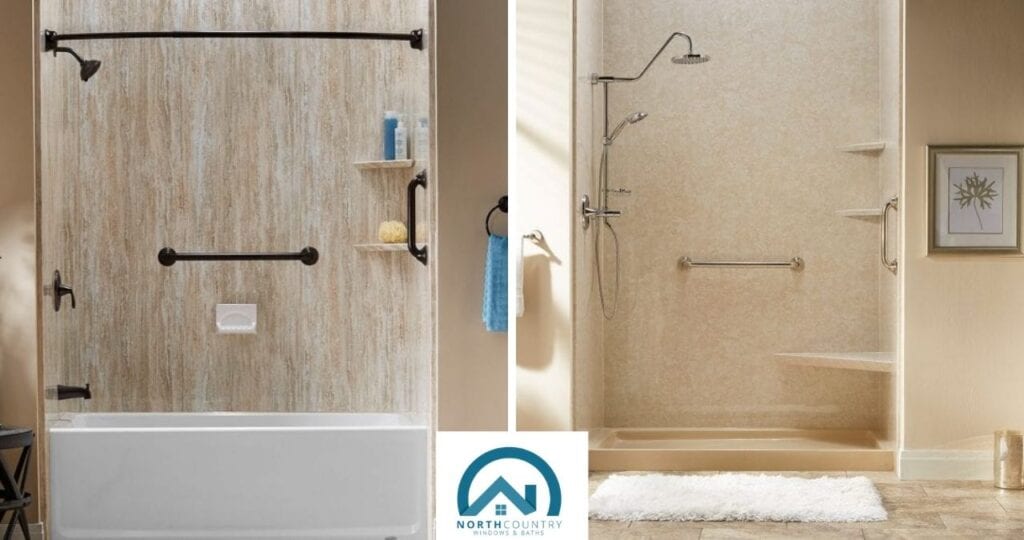
Whether you want a soaker tub surrounded by subway tile or a low threshold shower with granite-like walls, you can customize your BathWraps space and even add accessories like soap dishes, caddies, seating, grab bars, and more Contact us today.